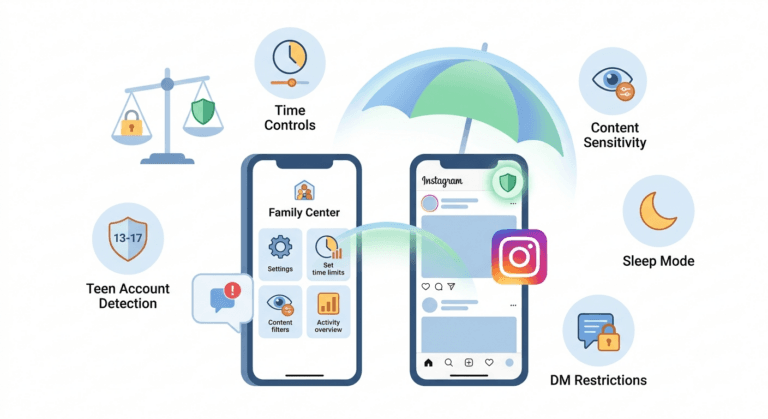
Instagram Parental Controls: What Is Automatic, What You Set
A Teen Account restricts things on its own; Family Center is what a parent adds. What each layer covers, what supervision never shows, and what changes next.
Posts published this month
A Teen Account restricts things on its own; Family Center is what a parent adds. What each layer covers, what supervision never shows, and what changes next.
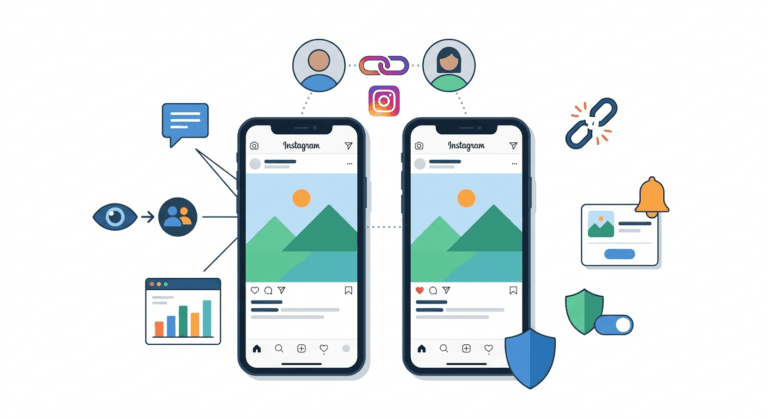
A collab post lands on both profiles and reaches both audiences at once. What your co-author sees, what a private account changes, and how to remove yourself.
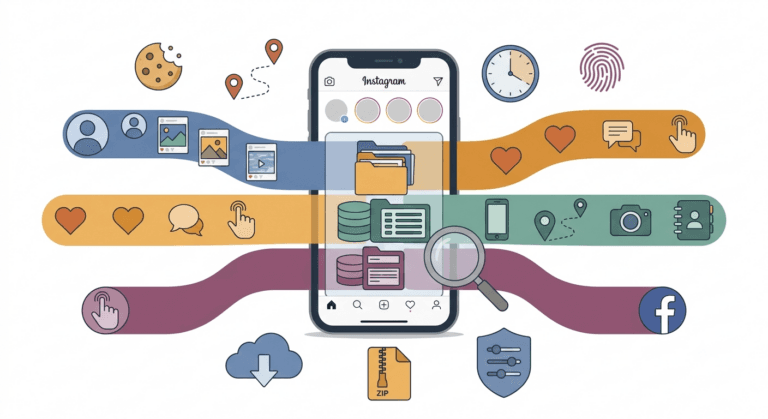
Instagram does not read your Google searches or listen through your mic. It buys the same signal from the sites you visit. Here is the route, and how to cut it.
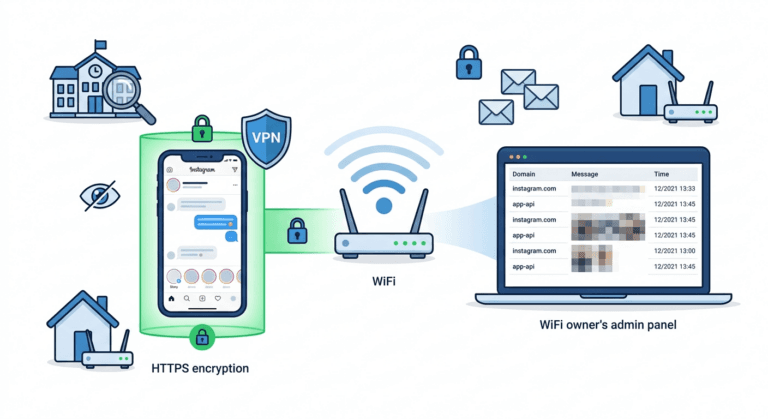
They see that you connected to Instagram, not what you did there — the traffic is encrypted. The one setup that changes this is a device somebody else manages.
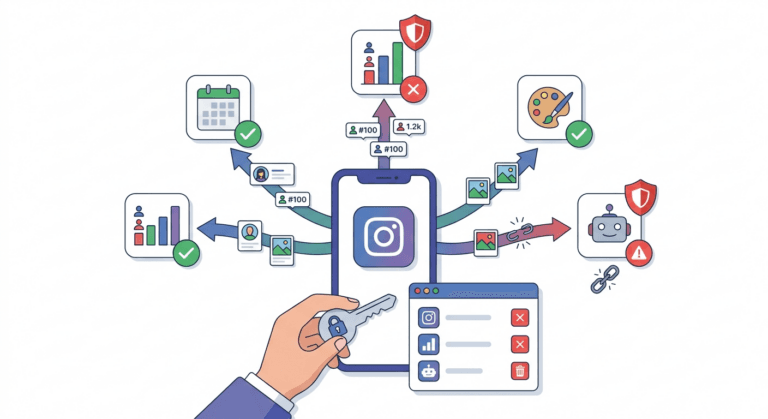
An authorised app sees your profile and your posts. It never sees your DMs. The ones that ask for your password see everything, and that is a different thing.
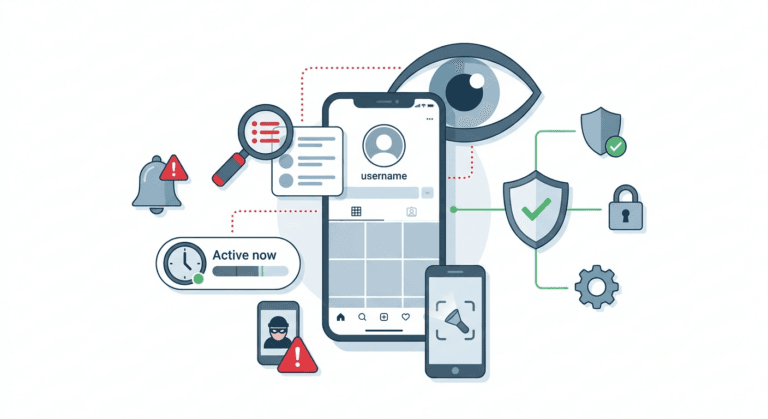
Only two kinds of monitoring exist: public data anyone can read, and Family Center supervision a teen has to accept. Neither shows DMs or who viewed a profile.
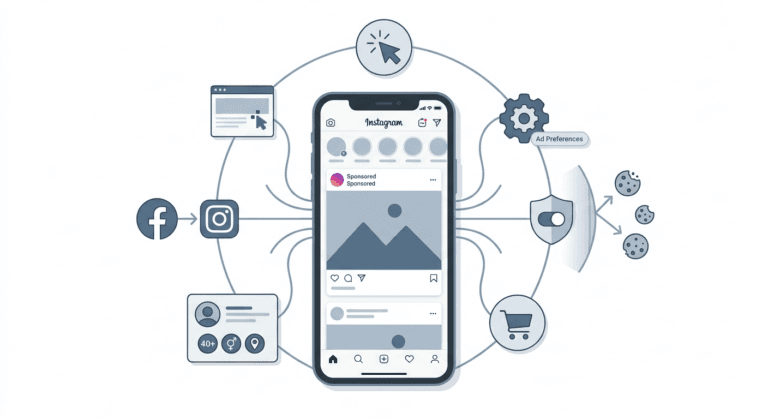
Four sources feed Instagram ad targeting, and you can switch off exactly one of them. What each control really does, and the extra options in the EU and UK.
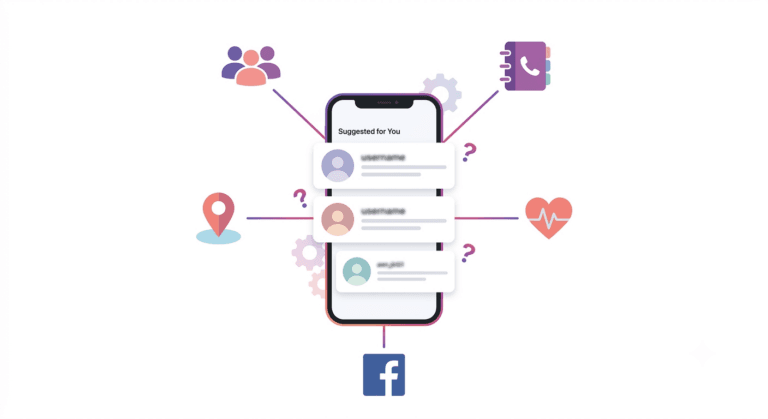
Meta publishes the signals: mutual connections, whether they follow you already, your last 28 days of follows, your uploaded contacts. Not profile views.
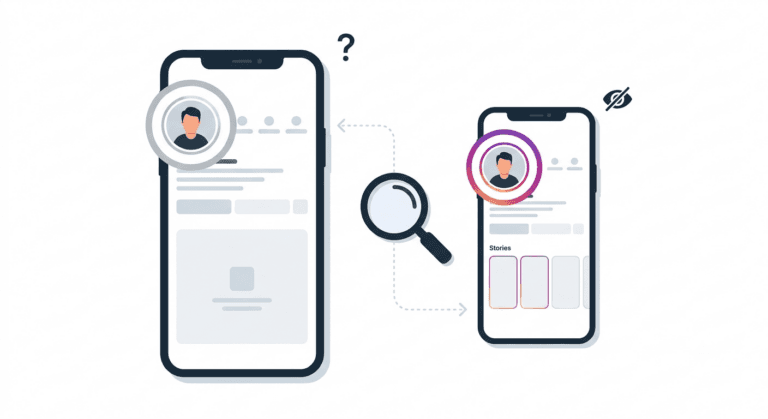
Instagram calls it hiding, not blocking, and it looks identical to nobody posting. Four states produce the same empty space — here is how to separate them.
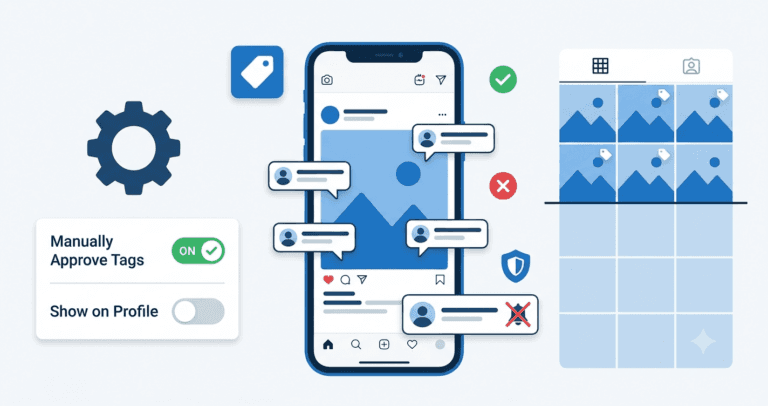
Removing a tag and hiding a photo are different actions with different results. Which four settings control tagging, and what each one leaves in place.