The Psychology of Followers and Unfollowers on Instagram


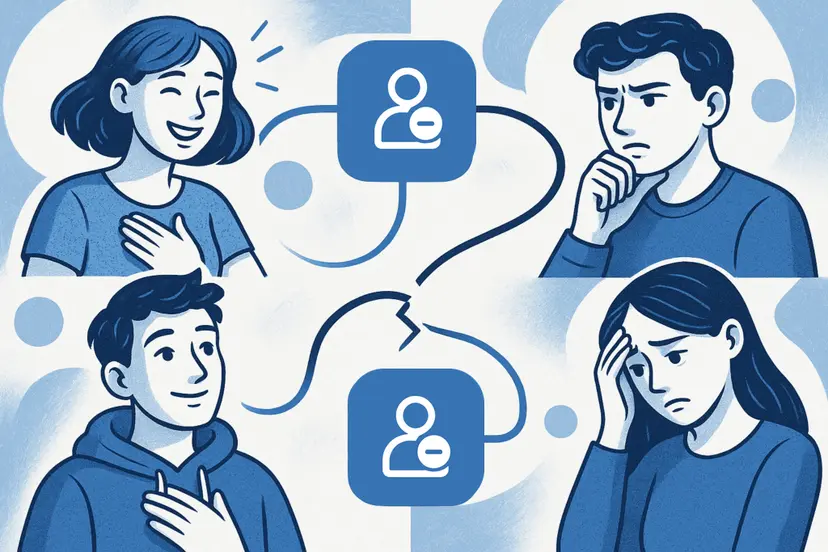
Every follow and unfollow on Instagram is a micro-decision shaped by identity, emotion, and social wiring — not just content quality. Research shows that the same neural pathways involved in real-world acceptance and rejection fire when someone taps Follow or Unfollow. This guide breaks down the psychological triggers behind both actions, explains why unfollows feel disproportionately painful, and offers a framework for using follower psychology to build a more resilient audience strategy.

Instagram has 3 billion monthly active users opening the app an average of 7.8 times per day. Behind every session is a stream of unconscious decisions: who to follow, who to keep, who to drop. These are not random. They follow predictable psychological patterns rooted in identity, belonging, social comparison, and emotional self-regulation.

The problem is that most creators and users treat follower counts as a content scorecard — "good content = follows, bad content = unfollows." That framing is incomplete. A person might unfollow an account they genuinely enjoy because it triggers comparison anxiety. Another might follow an account they never engage with because it signals identity alignment to their peers. The real drivers are psychological, not algorithmic. Our guide to posting times shows the exact frequency sweet spot by account size.

Why people follow: the five psychological triggers

A follow is not a content review. It is a social signal — a bet that this account will continue to deliver something the follower's brain values. Five core triggers drive that bet.

TriggerWhat happens in the brainWhat it looks like on Instagram
Identity signalingFollowing someone broadcasts "this is who I am" to the follower's own social circleA 22-year-old follows a sustainable fashion brand — not just for content, but to signal values to mutual followers
Belonging & affiliationThe brain's need for social inclusion drives people toward communitiesJoining a niche community (plant care, film photography, local food) satisfies the affiliation need
Aspiration & inspirationDopamine fires in response to content that represents an achievable-but-better version of the viewer's lifeFollowing fitness creators, entrepreneurs, or travel accounts for motivational fuel
Social proofHigh follower counts trigger a cognitive shortcut: "if many people follow, this must be valuable"Accounts crossing 10K, 100K, or 1M milestones see accelerated organic growth — the numbers recruit more numbers
Parasocial attachmentOne-sided emotional bonds form when a viewer feels they "know" a creator through Stories and personal contentA follower who watches every Story develops a sense of relationship — even though the creator has no idea they exist

The identity signaling trigger is the most underestimated. A 2025 Frontiers in Psychology study found that social media follows serve as public declarations of self-concept — people curate their following lists partly as an identity statement for others to see.

Did You Know? Research published in Behaviour & Information Technology (2025) found that active engagement — not passive scrolling — is the primary driver of parasocial bond formation on social media. Commenting, reacting to Stories, and sharing posts create a sense of mutual relationship, even when the interaction is entirely one-sided.

emotional motivations behind instagram connection and disconnection

Why people unfollow: it is rarely about your content

The assumption that unfollows mean "your content got worse" is psychologically inaccurate. Most unfollows are driven by changes in the follower — not changes in the creator. Content drift is one of the top reasons people unfollow.

Unfollow driverWhat is actually happeningHow common
Identity shiftThe follower's interests, values, or self-image have changed — your content no longer fits who they are becomingVery common (especially ages 18–30)
Comparison fatigueYour content triggers upward social comparison that erodes the follower's self-esteemCommon — a 2025 study found upward comparison on Instagram directly lowers global self-esteem
Feed curationThe follower is cleaning their feed for relevance, not rejecting you personallyVery common during "digital cleanups"
Content overloadToo many posts or Stories per day cause information fatigue and feed dominationModerate — threshold varies by user
Parasocial breakupThe follower formed an emotional bond that became uncomfortable, triggering a deliberate disconnectLess common but emotionally intense
Algorithmic invisibilityThe follower stopped seeing your posts, forgot they followed you, and unfollows during a list reviewCommon — Instagram shows each post to roughly 10% of followers initially

The comparison fatigue trigger deserves special attention. A 2025 study in Frontiers in Psychology found that social comparison on Instagram is directly associated with lower self-esteem and increased appearance anxiety — and that women experience this effect more strongly than men. When a follower unfollows, they may be protecting their mental health, not criticizing your work.

The rejection paradox: why losing one follower feels worse than gaining ten

Losing a follower produces a disproportionate emotional response. This is not irrational — it is neurological. This FOMO cycle can affect your mental health in measurable ways.

The brain processes social rejection through the anterior cingulate cortex, the same region that handles physical pain. A 2025 comparative study found that adolescents' self-esteem is particularly unstable and susceptible to fluctuations in social acceptance on platforms like Instagram, but adults are not immune — the effect simply decreases with age, it does not disappear.

Three mechanisms amplify the pain of an unfollow:

MechanismHow it works
Negativity biasThe brain weighs negative events 2–5x more heavily than positive ones. One unfollow registers with more emotional force than five new follows.
Ambiguity amplificationInstagram provides zero context for unfollows — no reason, no notification. The brain fills the information gap with worst-case explanations.
Loss aversionLosing something you had (a follower) feels worse than never having it. This is the same cognitive bias that makes financial losses sting more than equivalent gains.

For creators whose income or identity is tied to follower counts, this rejection paradox creates a vulnerability loop: each unfollow triggers anxiety, the anxiety shifts content toward validation-seeking, and validation-seeking content often accelerates further unfollows.

Did You Know? A 2025 study published in Frontiers in Psychology found that social media feedback loops affect adolescents and adults differently. Adolescents showed greater self-esteem volatility in response to likes and follower changes, while adults demonstrated more stable — but still measurable — emotional responses. The feedback loop exists at every age; only its intensity varies.

How social comparison drives both follows and unfollows

Social comparison is the single most powerful force shaping follower behavior on Instagram. It drives follows (aspiration) and unfollows (self-protection) through the same mechanism — just in opposite directions.

Comparison typeEmotional resultBehavioral outcome
Upward (they are doing better than me)Inspiration at low intensity; envy and anxiety at high intensityFollow when inspired, unfollow when the comparison becomes painful
Downward (I am doing better than them)Self-esteem boost, reliefFollow maintained — the account makes the follower feel good about their own position
Lateral (we are at the same level)Solidarity, belonging, or competitive tensionFollow maintained through community bond — or unfollow if it becomes competitive

Instagram's visual format supercharges social comparison. Unlike text-based platforms, Instagram delivers polished imagery — curated homes, bodies, vacations, achievements — that distorts the viewer's sense of "normal." A 2024 study in Discover Psychology confirmed that Instagram-specific comparison significantly predicts lower body-esteem and global self-esteem, particularly after exposure to aspirational content.

The practical implication: your followers are not just evaluating your content. They are evaluating how your content makes them feel about themselves. An account that consistently triggers upward comparison — even with objectively excellent content — will lose followers who need to protect their emotional equilibrium.

The parasocial factor: when followers feel like friends

Parasocial relationships — one-sided emotional bonds between audience and creator — are the invisible architecture of follower loyalty on Instagram.

A 2025 study in the Journal of the Association for Information Systems found that expertise and trustworthiness significantly strengthen parasocial bonds, while physical attractiveness does not. This means that authentic, knowledgeable creators build deeper follower loyalty than those relying on aesthetic appeal alone.

When a parasocial bond breaks — either because the creator's behavior changes or the follower's perception shifts — the unfollow feels less like removing a subscription and more like ending a relationship. This explains why some unfollows feel disproportionately personal on both sides.

The double-edged nature of parasocial bonds:

AdvantageRisk
Higher loyalty and engagementFollower expectations become relationship-level — difficult to meet at scale
Followers defend the creator during criticismA single "betrayal" (brand deal they dislike, opinion shift) triggers intense backlash
Strong word-of-mouth growthThe same emotional intensity that drives loyalty drives pain when the bond breaks

Psychological self-defense checklist

Use this framework to manage the emotional impact of follower dynamics without ignoring the data entirely.

  • Separate signal from noise — check unfollower data once per week with a specific purpose (content audit, audience shift analysis), not daily out of anxiety
  • Name the bias — when an unfollow stings, identify which mechanism is firing: negativity bias, ambiguity amplification, or loss aversion. Naming it reduces its power
  • Reframe the unfollow — an unfollow means "this content no longer fits my feed," not "this person has no value." Remind yourself of this distinction before interpreting the data
  • Audit your own feed — unfollow or mute accounts that trigger comparison anxiety in you. If you understand why you unfollow others, you will understand why others unfollow you
  • Track patterns, not individuals — a spike of 20 unfollows after a specific post is actionable data. One person leaving is statistical noise
  • Set a metrics window — designate one 15-minute block per week for reviewing follower analytics. Outside that window, the numbers do not exist
  • Build identity off-platform — if your self-worth fluctuates with your follower count, the platform has too much power. Invest in relationships and achievements that Instagram cannot quantify

Frequently Asked Questions

Why do Instagram unfollows feel like personal rejection?

The brain processes social media unfollows through the anterior cingulate cortex — the same region that handles physical pain and real-world social exclusion. This is amplified by negativity bias (losses feel worse than equivalent gains) and ambiguity (Instagram gives no reason for the unfollow, so the brain fills the gap with worst-case scenarios). The response is neurological, not a sign of oversensitivity.

What is the most common psychological reason people unfollow on Instagram?

Identity shift and feed curation are the two most common drivers. As people's interests, values, or life circumstances change, their following list stops reflecting who they are. Unfollowing is often an act of self-curation — updating a digital identity — rather than a rejection of the creator. Content overload and comparison fatigue are the next most common triggers.

Can understanding follower psychology actually help grow an Instagram account?

Yes. When you understand that follows are driven by identity signaling, belonging, and aspiration — not just content quality — you can build a strategy that addresses those deeper needs. Accounts that foster community (belonging), represent an achievable aspiration, and give followers a clear identity signal ("I follow this because I am this kind of person") retain followers more effectively than accounts optimized purely for reach.

How do parasocial relationships affect follower loyalty?

Parasocial relationships — one-sided emotional bonds between followers and creators — are the strongest predictor of long-term follower retention. Research shows they are built through perceived expertise and trustworthiness, not attractiveness. However, they are fragile: a single perceived betrayal (an inauthentic brand deal, a controversial opinion) can break the bond abruptly, turning a loyal follower into an active critic.


Understand your audience shifts with data, not guesswork. The Unfollowers Tracker shows exactly who unfollowed and when — from your own Instagram export, no password needed. For anonymous Story research, try the Instagram Story Viewer.

Tags: #instagram psychology #social media behavior #follower psychology #unfollow reasons #parasocial relationships #social comparison

Track Your Instagram Unfollowers

Discover who stopped following you and optimize your growth strategy with our free tool.

Discover Unfollowers

We use cookies. Policy