The Silent Treatment Online: What to Do When Friends Unfollow You on Instagram
When a friend unfollows you on Instagram, the silence is the message. No notification, no explanation, no confrontation — just a number dropping by one. Research shows this triggers the same neural rejection response as being excluded in person, but with an added layer: ambiguity. You do not know why, when, or whether it was even intentional. This guide covers the psychology behind why friend unfollows cut deeper than stranger unfollows, the unwritten rules of Instagram friendship in 2026, how to determine whether the unfollow was personal or incidental, and a framework for deciding when to address it versus when to let it go.
A stranger unfollowing you is a statistic. A friend unfollowing you is a statement — or at least, that is how the brain interprets it. The distinction matters because it determines your emotional response, and your emotional response determines whether the situation escalates or resolves.
Instagram in 2026 has become inseparable from real-life relationships. Following someone is not just a content preference — it is a social contract. Breaking that contract without explanation is the digital equivalent of walking past someone without acknowledging them. It is not always hostile. But it is always noticed.
The unwritten rules of Instagram friendship in 2026
Social media etiquette has evolved into a set of expectations that most people follow without ever articulating them. Understanding these unspoken rules explains why a friend's unfollow registers as a violation — not just a feed decision.
| Rule | What it means in practice | Why breaking it hurts |
|---|---|---|
| Mutual following is expected | Friends who know each other in real life follow each other on Instagram | Unfollowing implies the real-life connection is not valued |
| Engagement signals care | Liking posts and reacting to stories = digital acknowledgment of someone's life | Silence after consistent engagement feels like withdrawal |
| Life events require participation | Birthdays, milestones, achievements posted on Instagram expect reactions from friends | No reaction is interpreted as no interest |
| Support for creative efforts is obligatory | A friend starting a blog, brand, or creator account expects follower support | Not following or engaging signals lack of support |
| Unfollowing is a deliberate act | Because Instagram makes following seamless and unfollowing requires intentional steps | The deliberateness amplifies the perceived rejection |
These rules are not written anywhere. They are not enforced by the platform. But they are enforced socially — through feelings of hurt, confusion, and betrayal when they are broken.
Why friend unfollows hurt more than stranger unfollows
The psychology behind this distinction is well-documented. A stranger's unfollow is abstract. A friend's unfollow is personal — and the brain processes it accordingly.
| Factor | Stranger unfollow | Friend unfollow |
|---|---|---|
| Emotional investment | None — no relationship context | High — shared history and expectations |
| Ambiguity | Low — strangers unfollow for generic reasons | High — "what did I do wrong?" |
| Social rejection signal | Weak — no social bond existed | Strong — an existing bond was severed |
| Identity threat | Minimal | Significant — friendship is part of self-concept |
| Rumination likelihood | Low — forgotten within minutes | High — can persist for days or weeks |
| Real-world spillover | None — stays digital | Potential — affects next in-person interaction |
Research on ostracism — the psychological term for being excluded — shows that even brief, trivial exclusion events produce measurable distress. A 2023 study found that digital exclusion (being unfollowed, unfriended, or removed from a group chat) activates the anterior cingulate cortex, the same brain region that processes physical pain. The brain does not distinguish between someone walking away from you at a party and someone tapping the unfollow button on their phone.
Did You Know? Robin Dunbar's research on social networks shows that humans can maintain approximately 150 meaningful relationships at any time — with only about 5 in the innermost circle of close friends. Social media creates the illusion of hundreds of friendships, but the brain still operates on Dunbar's limits. When a friend from your inner circles unfollows, the pain is disproportionate because the brain treats it as losing one of its few deep connections — even though it was only a digital action.
What a friend's unfollow actually means: 8 scenarios decoded
Before assuming the worst, consider the full range of reasons a friend might unfollow. Context determines meaning.
| Scenario | What usually happened | Relationship signal strength | Recommended response |
|---|---|---|---|
| General feed cleanup — reduced following count by 100+ | Impersonal housekeeping to reduce content noise | Weak — you were part of a batch, not a target | None — check if they unfollowed other mutual friends too |
| Unfollowed after a specific post you made | Your content conflicted with their values, politics, or comfort level | Moderate — the post was the trigger, not necessarily you | Reflect on the content, but do not self-censor |
| Unfollowed during or after a real-life conflict | The unfollow is a continuation of the offline disagreement | Strong — digital action mirrors real-world tension | Address the real-life conflict, not the Instagram action |
| Unfollowed after a life change (new job, city, relationship) | Curating their feed to match their new identity or social circle | Moderate — about their transition, not your worth | Give space; the friendship may reconnect later |
| Unfollowed but still watches your stories | Emotional ambivalence — wants distance from the feed but not full disconnection | Mixed — the relationship is in a gray zone | Monitor the pattern; do not confront based on stories alone |
| Unfollowed after you became more successful or visible | Comparison-driven discomfort — your content triggers inadequacy | Moderate to strong — jealousy is personal but often unconscious | Not your problem to solve; continue being yourself |
| Accidental unfollow while scrolling | Genuine mistake — thumb slipped on the follow button | None — accidents happen on mobile | Wait — accidental unfollows are usually corrected within days |
| Unfollowed and also stopped communicating offline | The friendship is ending, and the unfollow is one of several withdrawal signals | Very strong — a pattern, not an isolated act | Have a direct conversation about the friendship itself |
The most important column is "relationship signal strength." A single data point — the unfollow itself — is almost never enough to draw conclusions. Patterns across time and across platforms tell the real story.
The silent treatment spectrum: unfollow vs. mute vs. restrict vs. block
Instagram offers multiple tools for creating distance. The tool someone chooses reveals their intent — each action sends a different message.
| Action | What it does | Your content visible to them? | Their content visible to you? | They notified? | What it signals |
|---|---|---|---|---|---|
| Mute | Hides your posts and/or stories from their feed | Yes (if they visit your profile) | Yes — no change | No | "I need a break from your content but I'm not ready to disconnect" |
| Unfollow | Removes your content from their feed entirely | Yes (if public account) | Yes — you still follow them | No | "I don't want to see your posts anymore" |
| Remove follower | Removes them from your follower list (soft block) | Yes (if public) | Yes — but you stop following them | No | "I don't want you seeing my posts" |
| Restrict | Hides their comments from public, moves DMs to requests | Yes | Yes | No | "I'm creating a quiet boundary" |
| Block | Complete disconnection — invisible to each other | No | No | Not directly, but discoverable | "I'm cutting all contact" |
The key insight: muting is the mildest action and the one friends most commonly use when they need space without drama. If your friend unfollowed rather than muted, they chose a more visible form of disconnection — which may indicate the decision carries more weight. But it can also mean they simply did not think about it as carefully as you are analyzing it now.
Did You Know? Instagram's "Mute" feature was introduced specifically to address the social awkwardness of unfollowing friends. Before mute existed (pre-2018), the only options were to unfollow (and risk the person finding out) or to endure content you did not want to see. Mute allows you to stay connected on paper while controlling your actual content exposure. If a friend unfollowed rather than muted, they either do not know about the mute feature or made a deliberate choice to disconnect more visibly.
How to find out if a friend unfollowed you
Instagram does not notify you about unfollows. There is no activity log, no alert, and no timestamp. Your follower count drops silently.
| Method | What it tells you | What it cannot tell you | Privacy risk |
|---|---|---|---|
| Search your follower list | Whether they currently follow you — yes or no | When the unfollow happened | None — they cannot see you searching |
| Visit their profile | Whether you still follow each other (button says "Follow" vs "Following") | When or why the change happened | None — profile visits are not tracked |
| Ask a mutual friend | Whether others were also unfollowed (batch vs targeted) | The actual reason | Social — involves a third party |
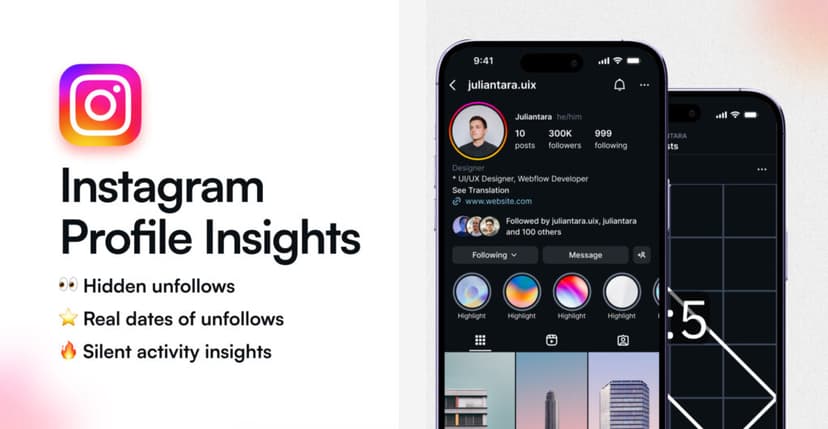
| Instagram data export + Unfollowers Tracker | Who unfollowed, approximate date, follow-unfollow patterns | The reason behind the unfollow | None — uses only your own data file |
The data export method (recommended)
The first three methods confirm the current state. Only the data export reveals when the unfollow happened — and timing is often the most important clue. An unfollow the day after an argument is very different from an unfollow during a general cleanup two months later.
- Open Instagram → Profile → Menu → Accounts Center.
- Navigate to Your Information and Permissions → Export Your Information.
- Select your profile, choose Device, set format to JSON, date range to All Time.
- Under "Choose specific information," select only Followers and Following.
- Tap Save and Start Export. Wait for the email.
- Download the ZIP file and upload it to the Unfollowers Tracker.
The tracker shows the approximate unfollow date, whether they refollowed later, and the full history of follower changes. No password, no third-party login, no API access — only your own data processed locally.
The decision framework: address it or let it go
Not every friend unfollow deserves a conversation. Reacting to every social media fluctuation puts a strain on real friendships. But some unfollows do signal something that needs to be addressed.
When to address it
The unfollow is worth discussing when all three conditions are met: the person is part of your close social circle (Dunbar's inner 15), the unfollow is part of a broader pattern of withdrawal (less texting, canceled plans, reduced in-person engagement), and you can approach the conversation calmly — from curiosity, not accusation.
How to bring it up: do it in person or on a call, never through DM. Frame it as a relationship check-in, not a social media complaint. Say "I noticed we haven't been connecting as much lately — is everything okay?" rather than "Why did you unfollow me on Instagram?" The first opens a conversation. The second opens a trial.
When to let it go
Let it go when the person is in your outer social circle (acquaintance-level), when the unfollow is an isolated act with no other signals of withdrawal, when your desire to ask is driven by anxiety rather than genuine concern, or when checking their follower activity has become compulsive rather than occasional.
What not to do
| Impulse | Why to resist it | What happens if you act on it |
|---|---|---|
| Send a DM asking why they unfollowed | Signals that you monitor their follower actions — feels surveillance-like | Awkward exchange, likely further distancing |
| Post a passive-aggressive story | "Funny how people show their true colors" is transparent to everyone | You look reactive; they feel justified |
| Unfollow them back immediately | Retaliatory unfollowing escalates a non-event into a conflict | Mutual unfollow standoff, real friendship damage |
| Discuss it in a group setting or group chat | Involves third parties and creates pressure | Friend group dynamics disrupted |
| Obsessively check if they refollowed | Compulsive checking feeds anxiety, not information | Your mental health deteriorates without any resolution |
The common thread: every impulsive reaction converts a small digital action into a real relationship problem. The unfollow happened. Your response is the only variable you control.
Rebuilding after a friend unfollows: the 30-day protocol
If the unfollowing friend matters to you and you want to preserve the relationship, a structured approach works better than emotional reactions.
| Timeframe | Action | Purpose |
|---|---|---|
| Days 1–7 | Do nothing on Instagram. Observe whether real-life communication changes. | Separate the digital signal from the real relationship |
| Days 7–14 | Reach out through a non-Instagram channel — text, call, or in-person meetup | Test whether the friendship is intact outside the platform |
| Days 14–21 | If communication is normal, the unfollow was likely a feed decision. Do not bring it up. | Avoid creating a problem where none exists |
| Days 14–21 | If communication is strained, address the relationship — not the unfollow — directly | Focus on the cause, not the symptom |
| Days 21–30 | Evaluate. Has the friendship resumed? Has it ended naturally? | Make a conscious decision about whether to invest further |
This protocol works because it separates the Instagram action from the real relationship. Many friendships survive unfollows when neither person makes the unfollow the main event.
Did You Know? Research from the Cleveland Clinic distinguishes between the "silent treatment" (intentional punishment through withdrawal) and "no contact" (a healthy boundary-setting behavior). When a friend unfollows you on Instagram, the act could be either one — and the distinction matters enormously. Silent treatment is designed to cause distress. No contact is designed to protect the person doing it. Assuming the worst interpretation before gathering evidence causes unnecessary pain.
Frequently Asked Questions
Why does it hurt so much when a friend unfollows me on Instagram?
The brain processes a friend's unfollow through the same neural pathways as real-world social exclusion. The anterior cingulate cortex — which handles both physical and social pain — activates when you perceive rejection from someone in your social circle. Unlike a stranger's unfollow, a friend's unfollow carries relationship context, shared history, and identity implications, which amplify the pain response far beyond the significance of the actual digital action.
Does Instagram notify you when a friend unfollows you?
No. Instagram does not send any notification when someone unfollows you, regardless of your relationship with them. Your follower count decreases by one with no alert, no name, and no timestamp. The only way to identify who unfollowed is through manual checking or by using an unfollower tracker that processes your Instagram data export.
How can I tell if a friend's unfollow was intentional or accidental?
Accidental unfollows happen — a thumb slip while scrolling is common on mobile. The clearest indicator is timing: accidental unfollows are usually corrected within hours or days when the person notices. If a week passes without a refollow, the action was almost certainly intentional. You can also check whether they unfollowed multiple people simultaneously (batch cleanup) or only you (targeted decision) by asking mutual friends or using follower tracking data.
Should I unfollow a friend back if they unfollowed me?
Only if it genuinely improves your experience on the platform. Retaliatory unfollowing — done to "send a message" or punish the other person — escalates the situation without resolving anything. If seeing their content causes you anxiety or negative comparison, unfollowing is practical self-care. Make the decision based on your feed quality, not on evening the score.
What is the difference between a friend muting me and unfollowing me?
Muting hides your posts and stories from their feed while keeping the follow connection intact. Unfollowing removes the connection entirely — your content no longer appears in their feed, and they no longer appear in your follower list. Muting is invisible and reversible with no social consequences. Unfollowing is also invisible (no notification), but it is discoverable if you check your follower list, and it carries more social weight as a relationship signal.
Is it passive-aggressive to unfollow a friend without telling them?
It depends on context and intent. During a general feed cleanup where someone unfollows dozens of accounts, there is no passive-aggressive intent — it is content curation. Unfollowing a specific friend immediately after a conflict, with no communication, is more likely passive-aggressive — using a platform action to communicate displeasure instead of words. The key distinction is whether the unfollow is a pattern of avoidance or a one-time content decision.
How do I check exactly when a friend unfollowed me?
Export your Instagram data: Profile → Menu → Accounts Center → Your Information and Permissions → Export Your Information. Select Followers and Following, set format to JSON. Upload the resulting ZIP file to the Unfollowers Tracker. The tool shows the approximate date of the unfollow, whether they refollowed later, and the full history of changes — data that is completely invisible inside the Instagram app.
Can a friendship survive an Instagram unfollow?
Yes — and most do. The unfollow feels significant in the moment, but it is a small digital action. Many friendships continue unchanged offline after one person unfollows the other. The key is not making the unfollow the centerpiece of the relationship. If the friendship is strong, the unfollow is a footnote. If the friendship was already weakening, the unfollow is a symptom — not the cause.
What does it mean if a friend unfollowed me but still likes my posts?
This is an unusual pattern that typically means one of two things. Either the unfollow was accidental and they have not noticed (they can still see and like your posts if your account is public), or they unfollowed to curate their feed but still visit your profile occasionally. It is generally a positive signal — they have not disengaged from you personally, only from having your content in their automatic feed.
Should I bring up the unfollow in person?
Only if the person is a close friend and the unfollow is part of a broader pattern of withdrawal. If you do, frame it as a relationship check-in — "Is everything okay between us?" — not a social media audit — "Why did you unfollow me?" The first shows care about the friendship. The second shows surveillance of their Instagram activity. If the unfollow is the only signal of distance, bringing it up in person is likely to create more awkwardness than it resolves.
Stop guessing whether your friends unfollowed you. Upload your Instagram data export to the Unfollowers Tracker to see exactly who unfollowed and when — no passwords, no API access, just your own data. For anonymous Story viewing, explore the Instagram Story Viewer.
Tags: #friend unfollow instagram #silent treatment online #instagram friendship #social media etiquette #digital boundaries #unfollower tracker
Track Your Instagram Unfollowers
Discover who stopped following you and optimize your growth strategy with our free tool.
Discover Unfollowers